
A color analysis quiz helps you discover which colors complement your natural features, including your skin tone, eye color, and hair color. By identifying your personal color palette, you can choose clothing, makeup, accessories, and hairstyles that enhance your appearance. Whether you are curious about seasonal color analysis or want to improve your everyday style, this beginner-friendly guide explains how color analysis works and how to find shades that suit you.
What Is a Color Analysis Quiz?
A color analysis quiz is a simple assessment designed to help you identify the colors that harmonize with your natural appearance. It usually considers your skin undertone, hair color, eye color, and the way different shades look against your face. The results can help you understand why certain colors make you look brighter while others may appear less flattering.
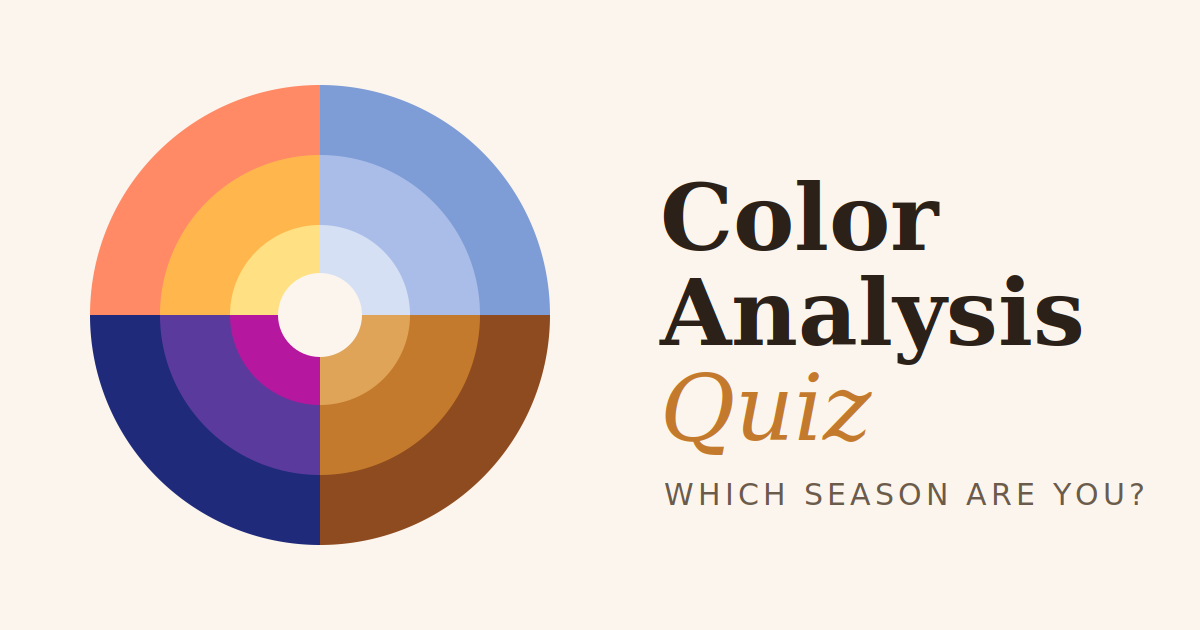
Personal color analysis is commonly based on four seasonal categories: Spring, Summer, Autumn, and Winter. Some systems also divide these seasons into twelve or sixteen subcategories for greater accuracy. A quiz provides a convenient starting point for discovering your likely season and developing a wardrobe that reflects your natural coloring and personal preferences.
- Discover your personal color palette.
- Identify warm, cool, or neutral undertones.
- Explore the four seasonal color types.
- Find flattering clothing shades.
- Choose makeup colors more confidently.
- Understand your natural color contrast.
- Improve wardrobe coordination.
- Explore your personal style.
How Does a Color Analysis Quiz Work?
Most online color analysis quizzes ask questions about your complexion, natural hair color, eye color, and reactions to different color combinations. Some quizzes also include photographs or comparisons between warm and cool shades. Based on your answers, the quiz estimates which seasonal palette may complement your natural features and provides suggestions for suitable colors.
For more reliable results, complete the quiz in natural daylight and consider your natural coloring rather than temporary changes caused by tanning, hair dye, or makeup. Online assessments vary in quality, so their results should be treated as helpful guidance rather than a definitive professional diagnosis. Testing fabric colors near your face can help you confirm whether the suggested palette works for you.
- Answer every question honestly.
- Use natural lighting when checking your features.
- Consider your natural hair color.
- Examine your eye color carefully.
- Compare warm and cool shades.
- Avoid relying on heavily filtered photos.
- Check how colors affect your complexion.
- Use the results as a starting point.
Understanding Skin Undertones in Color Analysis
Skin undertone is an important part of a color analysis quiz because it describes the subtle hue beneath the surface of your skin. The three commonly used categories are warm, cool, and neutral. Warm undertones often have golden, peachy, or yellow hints, while cool undertones may appear pink, rosy, or bluish. Neutral undertones combine characteristics of both groups.
Your surface skin tone can change with sun exposure, age, or skincare, but your underlying undertone generally remains more consistent. Vein color and jewelry comparisons are sometimes used as clues, although neither method is completely reliable on its own. Comparing several fabric colors near your face is often more useful for understanding which shades make your complexion appear balanced and vibrant.
- Warm undertones may suit golden shades.
- Cool undertones may suit icy colors.
- Neutral undertones can work with varied palettes.
- Peachy skin may suggest warmth.
- Rosy skin may suggest coolness.
- Vein color is only a rough indicator.
- Gold and silver jewelry can provide clues.
- Fabric comparisons help test your results.
Discover the Four Seasonal Color Palettes
The seasonal color analysis system groups natural coloring into four broad categories. Spring generally features warm, light, and clear colors, while Summer is associated with cool, soft, and muted shades. Autumn commonly includes warm, rich, earthy colors, and Winter emphasizes cool, clear, and high-contrast shades. These categories provide a simple framework for understanding which color families might complement your appearance.
Your season is not determined by skin tone alone. Hair depth, eye color, undertone, and the contrast between your features can all influence the result. For example, two people with dark hair may belong to different seasons because one has warm, muted coloring while the other has cool, high-contrast features. A color analysis quiz helps narrow down the possibilities.
- Spring: Coral, peach, warm green, and ivory.
- Summer: Dusty rose, lavender, and soft blue.
- Autumn: Rust, olive, mustard, and terracotta.
- Winter: Emerald, cobalt, burgundy, and icy pink.
- Spring palettes often feel fresh and bright.
- Summer palettes tend to look gentle and cool.
- Autumn palettes feature earthy richness.
- Winter palettes often create striking contrast.
How to Find Your Most Flattering Clothing Colors
Once you understand your likely seasonal palette, you can use it to make smarter clothing choices. Start by comparing shirts, scarves, or fabric swatches in different shades near your face. Look for colors that make your complexion appear even, bring attention to your eyes, and create a balanced overall appearance. Your most flattering colors may also help you choose more versatile everyday outfits.
You do not need to replace your entire wardrobe to benefit from personal color analysis. Begin with a few basic items in your recommended palette, such as a shirt, jacket, or scarf. Then introduce accent colors through accessories and shoes. Remember that personal style, comfort, cultural preferences, and individual taste matter just as much as seasonal color recommendations.
- Choose basic clothing in versatile shades.
- Test colors near your face.
- Compare similar shades side by side.
- Select accent colors that complement your palette.
- Coordinate clothing with your existing wardrobe.
- Experiment with different fabric textures.
- Consider your lifestyle and personal preferences.
- Wear colors that make you feel confident.
Using Your Color Analysis Results for Makeup and Hair
A color analysis quiz can also guide your makeup choices by suggesting lipstick, blush, eyeshadow, and foundation undertones that complement your natural coloring. Warm palettes may work well with peach, coral, bronze, and warm brown, while cool palettes may favor berry, rose, cool pink, and blue-based red. These suggestions are starting points rather than strict rules, and individual products can behave differently on different skin tones.
Hair color can influence the overall harmony of your appearance, especially when it changes the contrast between your hair, eyes, and complexion. Golden brown, copper, and warm caramel may complement some warm palettes, while ash brown, cool espresso, or cool-toned blonde may suit some cooler palettes. Before making a major change, consider your maintenance preferences, natural coloring, and advice from a qualified stylist.
- Match foundation undertones to your complexion.
- Explore lipstick shades within your palette.
- Try blush colors that complement your undertone.
- Use eyeshadow to enhance your eye color.
- Consider warm or cool hair color options.
- Test makeup in natural daylight.
- Avoid choosing foundation by surface shade alone.
- Prioritize comfort and personal preference.
Common Color Analysis Quiz Mistakes to Avoid
One common mistake is assuming that skin tone alone determines your seasonal category. People with similar complexions can have different undertones, contrast levels, and natural coloring. Another mistake is relying entirely on online photographs, which can be affected by lighting, camera settings, screen brightness, and image filters. These factors can make a warm complexion appear cool or change how a particular color looks.
It is also easy to treat seasonal color analysis as a set of rigid fashion rules. In reality, personal color palettes are guides for making informed choices, not restrictions on what you can wear. If a recommended shade does not suit your taste or feel comfortable, experiment with a different variation. Your best palette should support your confidence rather than limit your creativity.
- Do not rely on skin tone alone.
- Avoid testing colors under colored lighting.
- Do not trust filtered photographs completely.
- Remember that screen colors can vary.
- Avoid assuming every seasonal rule is absolute.
- Do not confuse hair dye with natural hair color.
- Test suggested colors before buying clothing.
- Keep personal style and comfort in mind.
How to Get the Most Accurate Color Analysis Results
To improve your color analysis results, begin with a clear understanding of your natural features and compare colors in consistent lighting. Remove makeup when evaluating your complexion, if practical, and use unfiltered photographs when an online quiz requires pictures. Test both warm and cool colors to see which shades create the most balanced appearance. Multiple observations are generally more useful than relying on a single clue.
If your quiz results seem confusing, consider a more detailed twelve-season color analysis or seek an in-person consultation with a trained color analyst. Professional analysis may examine hue, value, chroma, and contrast through direct fabric comparisons. Even then, the outcome should reflect your individual preferences and goals. Use the information to build a practical color palette that makes shopping, outfit planning, and makeup selection easier.
- Complete the quiz in consistent lighting.
- Use unfiltered photographs when requested.
- Compare warm and cool color families.
- Observe how colors affect your facial appearance.
- Consider brightness and color intensity.
- Explore your likely seasonal subcategory.
- Test recommendations with real fabrics.
- Adapt your palette to your everyday lifestyle.
Frequently Asked Questions About Color Analysis Quizzes
Can I take a color analysis quiz for free?
Yes. Many online color analysis quizzes are available for free. They typically ask about your skin undertone, hair, eyes, and color preferences. Free quizzes can provide a useful initial estimate, although their accuracy depends on the questions, assessment method, and quality of any photographs you submit.
Is a color analysis quiz accurate?
A quiz can help you identify a likely seasonal palette, but its accuracy varies. Automated assessments may struggle with lighting differences, dyed hair, and complex undertones. Comparing actual fabrics near your face or consulting a professional can help you evaluate the results more confidently.
What is the difference between skin tone and undertone?
Skin tone describes how light or deep your complexion appears at the surface. Undertone refers to the underlying warm, cool, or neutral quality of your skin. Two people with similar skin tones can have different undertones and may look best in different color palettes.
Can my color season change over time?
Your underlying coloring usually remains relatively consistent, but visible features can change with age, gray hair, tanning, or hair dye. These changes may affect which shades you prefer or how strongly you identify with a seasonal palette.
Do I have to wear only the colors in my palette?
No. Your recommended palette is a practical guide, not a strict rule. You can wear any color you enjoy and adjust its shade, brightness, or placement to suit your preferences.
How can I identify my season without a professional?
Start with a reliable color analysis quiz, examine your natural coloring, and compare warm versus cool fabrics in daylight. Then consider whether lighter, darker, softer, or brighter colors appear most harmonious with your features. Combining these observations can help you identify a likely season.
Final Thoughts
A color analysis quiz is an accessible way to explore your personal color palette and understand how different shades interact with your natural features. By learning about skin undertones, seasonal color categories, contrast, and color intensity, you can make more informed decisions about clothing, makeup, and hair color.
The most useful results come from combining quiz recommendations with real-world experimentation. Try different shades, observe how they make you feel, and develop a palette that fits your lifestyle. Whether your result points toward Spring, Summer, Autumn, or Winter, the goal is to build a personal style that feels authentic, coordinated, and confident.